Helping Patients Regain Mobility and Independence: What Makes Pain Management Meaningful

For someone living with chronic pain, even the simplest daily activities can become difficult.
Holding a glass of water, raising an arm, walking without assistance, or getting dressed independently may be things most people take for granted. But for patients struggling with pain and limited mobility, these everyday movements can represent major personal goals.
At Dr. Noe Zamudio's clinic in Los Algodones, Mexico, helping patients improve their comfort, movement, and quality of life is central to the philosophy of care.
For Dr. Zamudio, the most meaningful moments in medicine are not simply about performing a procedure. They are about seeing what improved function can mean in a patient's everyday life.
When Chronic Pain Affects Everyday Life
Chronic pain is more than physical discomfort.
Over time, persistent pain can affect mobility, sleep, confidence, independence, and emotional well-being.
Some patients begin avoiding activities they once enjoyed. Others find themselves depending on family members for tasks that previously required no assistance.
These limitations may affect different areas of the body, including:
Hands and wrists
Shoulders and arms
Hips and knees
Neck and lower back
Ankles and feet
The impact can be especially significant for older adults, although chronic pain and mobility problems can affect people of any age.
For many patients, the goal of treatment is not simply to report a lower pain score. It is to regain the ability to participate more comfortably in everyday life.
Why Improving Mobility Can Change a Patient's Life
Mobility is closely connected to independence.
Consider the difference between needing help to stand up and being able to rise from a chair comfortably.
Or the difference between avoiding a family outing because of pain and feeling confident enough to participate.
Even modest functional improvements can have a meaningful impact.
Depending on the patient's condition, treatment goals may include:
Improving range of motion
Reducing pain during daily activities
Increasing physical confidence
Supporting strength and stability
Making routine movements easier
Reducing limitations that interfere with independence
These goals help physicians and patients evaluate progress in ways that reflect real-life needs.
The Importance of Hand Function
Our hands allow us to perform countless essential tasks.
Eating, holding objects, writing, dressing, and maintaining personal hygiene all depend on coordinated movement.
When hand pain or stiffness becomes severe, patients may lose the ability to perform some of these activities independently.
Dr. Zamudio recalls an especially emotional experience involving an older patient who had significant difficulty moving both hands.
Following treatment, the patient demonstrated improvements in hand movement that were deeply meaningful to him and his family.
For the doctor, the emotional response was a powerful reminder of how much everyday independence matters.
This experience reflects one patient's reported outcome, not a prediction of what other patients should expect. Recovery and treatment responses vary according to the diagnosis and individual circumstances.

Pain Management Is About More Than Temporary Relief
When patients seek treatment for chronic pain, their immediate priority is often to feel better.
That is understandable.
However, effective pain management should also consider why the symptoms are occurring and how they affect the patient's ability to function.
Pain may be associated with several conditions, including:
Arthritis
Tendon injuries
Muscular problems
Joint degeneration
Nerve-related conditions
Previous injuries
Certain spinal conditions
Because the underlying causes differ, the appropriate treatment must also differ.
A personalized approach begins with understanding the patient's symptoms, medical history, previous treatments, and functional limitations.
The objective is to identify appropriate strategies that may improve comfort and support movement rather than assuming every patient needs the same procedure.
The Role of Personalized Treatment
No two patients experience chronic pain in exactly the same way.
One person may struggle with shoulder mobility after an injury. Another may experience knee pain that interferes with walking. Someone else may have difficulty using their hands because of stiffness or an underlying joint condition.
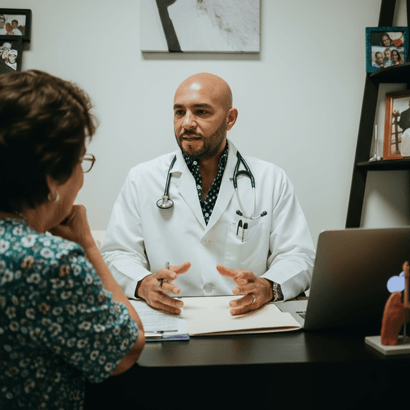
At Dr. Noe Zamudio's clinic, the treatment process begins with an individualized medical evaluation.
Depending on the diagnosis, the physician may discuss approaches involving pain management, rehabilitation, physical activity, or other clinically appropriate therapies.
Certain regenerative procedures may also be discussed in selected circumstances, with attention to the available evidence, potential risks, and limitations.
The purpose of personalization is to connect the treatment strategy with the patient's actual medical needs.

Why Patient Experiences Matter
Patient experiences can provide insight into the human side of healthcare.
They remind us that medical outcomes are not limited to laboratory findings, imaging studies, or measurements taken during an examination.
For some patients, meaningful progress may involve walking more comfortably.
For others, it may mean being able to lift an arm, hold an object, or return to a favorite activity.
Dr. Zamudio describes moments when patients and their families have expressed strong emotions after experiencing improvements in movement or function.
These experiences are among the reasons he finds his work rewarding.
However, personal experiences should always be understood in context. A patient's improvement does not establish that a particular treatment will produce the same result for someone else.
A responsible treatment decision should consider the diagnosis, medical evidence, alternatives, risks, and expected outcomes.
Quality of Life Should Be Part of Every Treatment Conversation
When evaluating chronic pain, an important question is:
What would you like to be able to do again?
The answer may be different for every patient.
Some want to return to recreational activities. Others want to walk with less discomfort, remain independent at home, or participate more fully in family life.
Discussing these goals during a consultation can help establish realistic expectations and identify meaningful ways to measure progress.
Healthcare is not only about treating symptoms.
It is also about helping people maintain function, confidence, and the ability to participate in the activities that matter to them.
Schedule a Personalized Pain Management Consultation
If chronic pain, stiffness, or limited mobility is affecting your everyday life, a medical evaluation can help clarify the possible causes and available treatment options.
At our clinic in Los Algodones, Baja California, Dr. Noe Zamudio takes an individualized approach to understanding each patient's condition and functional goals.
Whether you are experiencing persistent joint discomfort, reduced mobility, or limitations following an injury, the first step is understanding your situation.
Contact our team to schedule a consultation with Dr. Noe Zamudio and explore appropriate options for improving your comfort, mobility, and quality of life.
Medical disclaimer: This article is for educational purposes only. Patient experiences are individual and do not guarantee similar results. Diagnosis and treatment recommendations require a medical evaluation.